El Segundo, Calif., Jan. 14, 2026 — As autism diagnoses continue to rise across the United States, toy manufacturers are responding to a cultural shift that positions neurodiversity not as an exception but as a fundamental aspect of childhood experience. Mattel Inc. introduced its first autistic Barbie doll this week, developed over 18 months in partnership with the Autistic Self Advocacy Network, marking what industry experts say is a pivotal moment in how representation shapes child development.
The trend toward inclusive toy design reflects broader societal recognition that representation creates belonging. The Centers for Disease Control and Prevention reports that approximately 1 in 31 eight-year-old children in the United States has been diagnosed with autism, with prevalence increasing among Black, Hispanic, Asian and Pacific Islander children. Research continues to show autism is frequently overlooked or misdiagnosed in girls, who may not receive diagnoses until adulthood.
“It is so important for young autistic people to see authentic, joyful representations of themselves, and that’s exactly what this doll is,” said Colin Killick, executive director of the Autistic Self Advocacy Network. “Partnering with Barbie allowed us to share insights and guidance throughout the design process to ensure the doll fully represents and celebrates the autistic community, including the tools that help us be independent.”
The doll’s design reflects common ways autistic individuals experience and process the world. Features include articulated elbows and wrists that allow for stimming movements and hand gestures, which many autistic people use to regulate sensory information or express emotion. The face sculpt includes a gaze that shifts slightly to the side, acknowledging how some individuals with autism process eye contact differently than neurotypical people.
“Barbie has always strived to reflect the world kids see and the possibilities they imagine, and we’re proud to introduce our first autistic Barbie as part of that ongoing work,” said Jamie Cygielman, Mattel’s global head of dolls. “The doll, designed with guidance from the Autistic Self Advocacy Network, helps to expand what inclusion looks like in the toy aisle and beyond because every child deserves to see themselves in Barbie.”
Sensory considerations shaped every design element. The purple pinstripe dress features a loose, flowy cut with short sleeves and minimal fabric-to-skin contact. Flat Mary Jane shoes promote stability and ease of movement. The doll includes a functional fidget spinner for tactile regulation, pink noise-canceling headphones for sensory management, and a tablet displaying augmentative and alternative communication symbols that some nonverbal autistic individuals use to communicate.
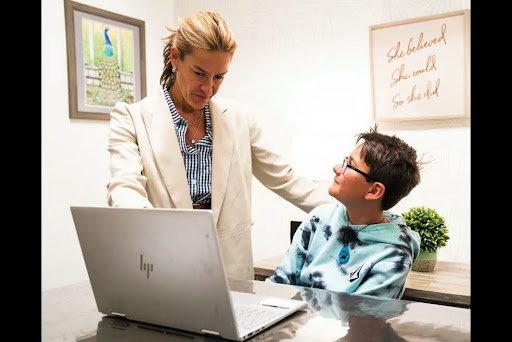
Educators who work with neurodivergent students see the release as a meaningful step toward broader acceptance. “Representation is so important,” said Beven Byrnes, executive director of Bridges Middle School in Portland, Oregon, the state’s only middle school specifically designed for students with learning differences. “Children with disabilities are underrepresented in so many different ways, and so many different levels of what we all are seeing all the time, or misrepresented. That representation is about belonging, and that’s exactly what this is all about.”
The autistic Barbie joins a Barbie Fashionistas collection that now includes more than 175 dolls featuring diverse skin tones, body types, hair textures and disabilities. Previous additions have included dolls with Down syndrome, blindness, wheelchairs, prosthetic legs, vitiligo and Type 1 diabetes. The collection positions disability and neurodiversity as variations rather than exceptions, normalizing difference through play.
About Bridges Middle School
Bridges Middle School is Oregon’s only middle school specifically designed for students with learning differences, including ADHD, autism, dyslexia, and anxiety. Founded in 1998, Bridges has served students through evidence-based, student-centered education with small class sizes and individualized learning approaches. The school combines social-emotional development alongside academics and executive function coaching, transforming how neurodivergent students learn, grow, and succeed.
For more information about Mattel, visit mattel.com.
Press Contact:
Heather Holmes
heather@publicityforgood.com
1+(828)332-5307
publicityforgood.com